← Session 2
MUH 3633 · Archive Project

Session 2 — Secondary Sources

What is scholarship for? How do we find, read, and use academic sources to contextualize primary materials?

Dr. Melissa J. Scott
Week 13 · Wednesday

Today

  • Primary vs. secondary sources — what's the difference?
  • What makes a source scholarly and peer-reviewed?
  • How to read an academic article
  • Scholarship as conversation
  • In-class exercise: Archive #2 on Canvas

Primary vs. Secondary Sources

What's the difference, and why does it matter?

Two Kinds of Sources

Primary Sources

  • Original materials from the time/place under study
  • Recordings, letters, photographs, field notes, scores
  • The evidence — what you analyze
  • Example: a 1937 field recording from the Archive of American Folk Song

Secondary Sources

  • Scholarship about primary sources
  • Journal articles, books, dissertations, reviews
  • The interpretation — how others have made sense of the evidence
  • Example: a journal article analyzing folk revival collecting practices

What Makes a Source Scholarly?

  • Peer-reviewed: evaluated by other experts before publication
  • Written by scholars with institutional affiliations
  • Published in academic journals or university presses
  • Includes citations and a bibliography — sources its own claims
  • Makes an argument, not just a summary

Tip: use library databases (JSTOR, RILM, Google Scholar) to find peer-reviewed sources. Wikipedia is a starting point, not a citation.

Screenshot of a library database showing a peer-reviewed banner on an article about Alan Lomax's music data projects

Example: the library flags this article about Alan Lomax's music data projects as "peer-reviewed."

How to access? When to cite?
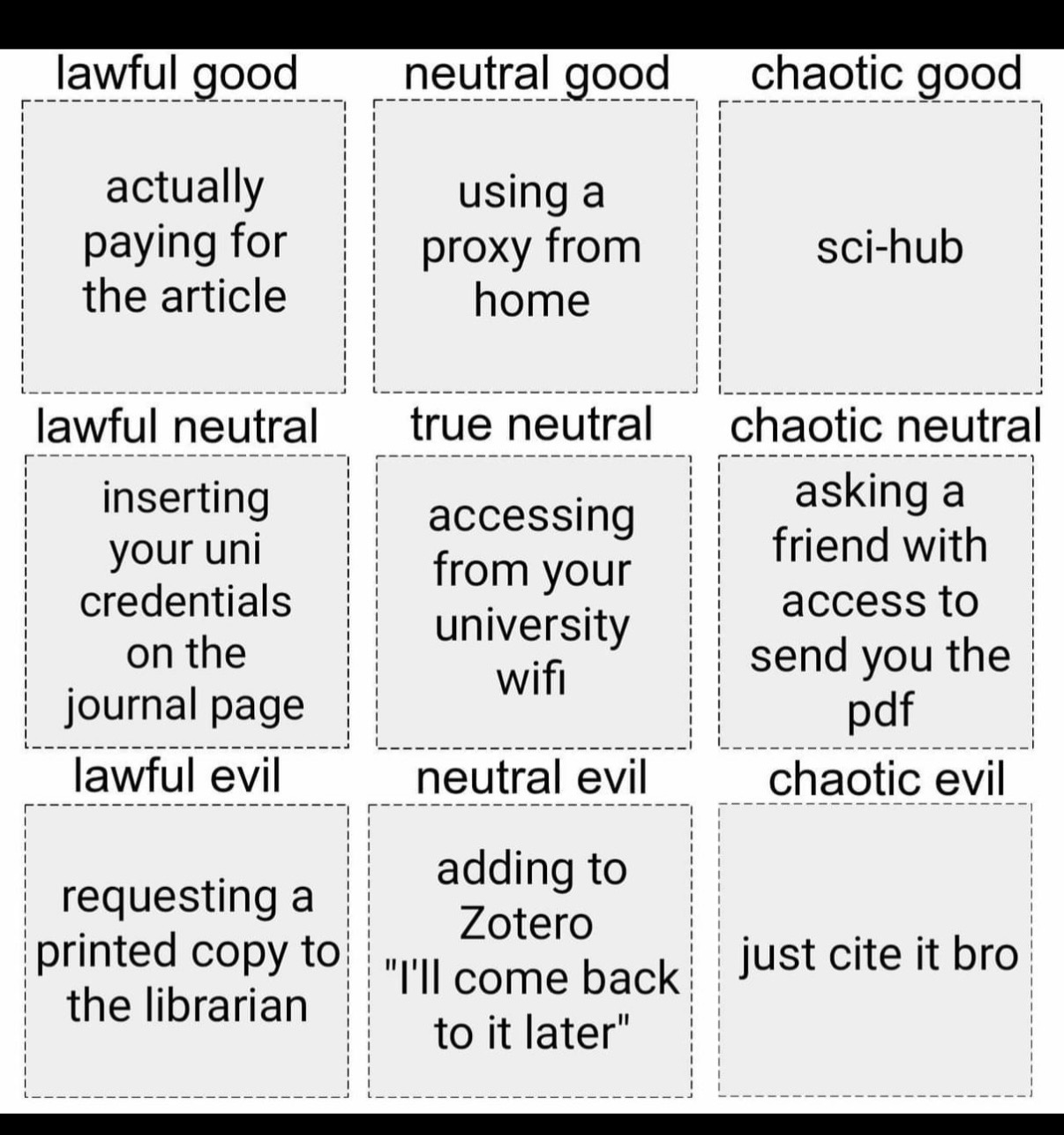
Internet meme about when and how to use citations in academic writing

Source: the internet :)

Key Concept

Scholarship Is a Conversation

When you conduct research, you are not just collecting facts — you are entering into a dialogue with other scholars who have studied similar questions.
  • Each article responds to earlier work and opens space for future inquiry
  • Citations are how scholars acknowledge the conversation
  • Your job: figure out what the scholar is arguing, what evidence they use, and where your own analysis fits in

How to Read an Academic Article

1. Abstract
Read this first — it summarizes the argument, method, and findings in a few sentences.
2. Introduction & Conclusion
These frame the central claim. What question does the author ask? What do they conclude?
3. Evidence & Method
What kind of evidence does the author use (recordings, interviews, scores)? How do they analyze it?
4. Relevance
How does this scholarship help you understand or contextualize your primary source?
How can a secondary source change the way you hear or interpret a primary source?
Think about context, framing, and what the scholar draws your attention to that you might not have noticed on your own.
Archive #2

In-Class Exercise

  1. We will work through a provided abstract and excerpt from a scholarly article together.
  2. Take note of: the author's central claim, the evidence they use, and how it can support interpretation.
  3. Then pick one of the provided articles (or find your own) and locate the same things: claim, evidence, and potential relevance.

Submit "Archive #2" on Canvas by end of day. Graded on completion and engagement.

Due Friday

Transcription Assignment

  • Attempt to transcribe 30 seconds of one of the assigned audio files
  • It doesn't need to be complete or correct
  • You can experiment with different ways of representing sound (e.g., spectrogram, notation, prose description)
  • Bring your attempt to class on Friday — be ready to discuss and share your experience
1 / 11