Roots & "Hillbilly" Records
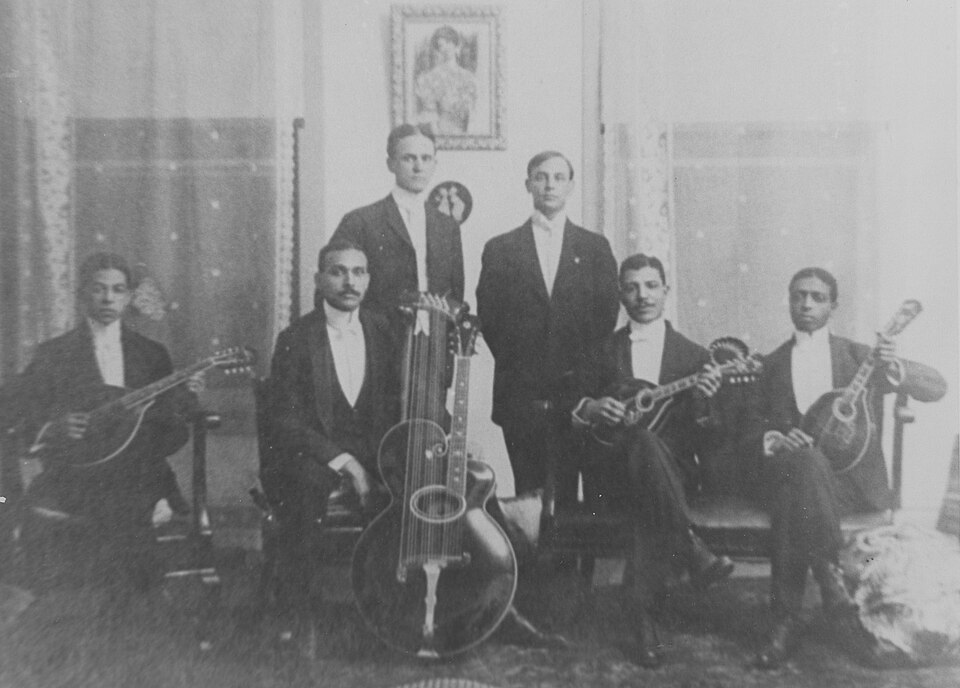
Southern string-band music — ballads, fiddle tunes, blues, and cowboy songs — enters commercial recording as labels identify a rural market.
The Sound
- String band — fiddle, acoustic guitar, banjo; later steel guitar
- A blend of popular songs, Irish/Celtic fiddle tunes, Euro-American and African American ballads, "cowboy songs," and blues
- In the Southwest: Mexican and Mexican American styles — corrido, mariachi
- Nasal "twang" vocal delivery; linear storytelling; oral transmission
- The banjo itself descends from West African instruments such as the ngoni
Key Moments
- 18th c. — Scotch-Irish migration into Appalachia; 19th c. industrial growth (coal, lumber, iron)
- 1910 — John Lomax publishes Cowboy Songs and Other Frontier Ballads; 1917 — Cecil Sharp collects Appalachian folk songs
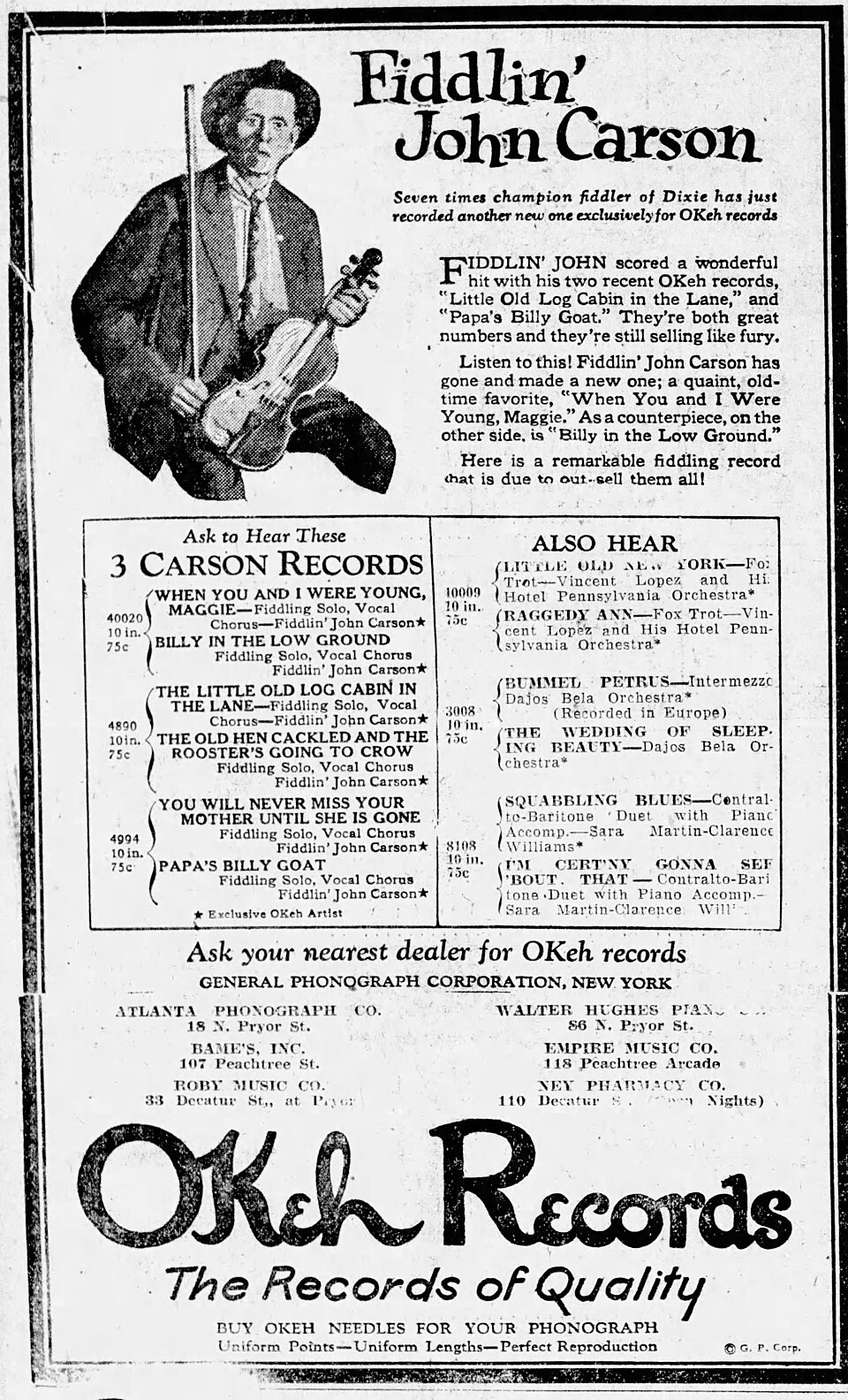
- 1923 — Okeh records Fiddlin' John Carson in Atlanta; its surprise success opens the "hillbilly" market (Malone & Laird 2018)
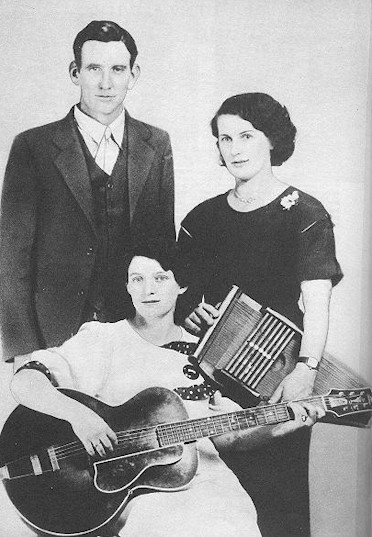
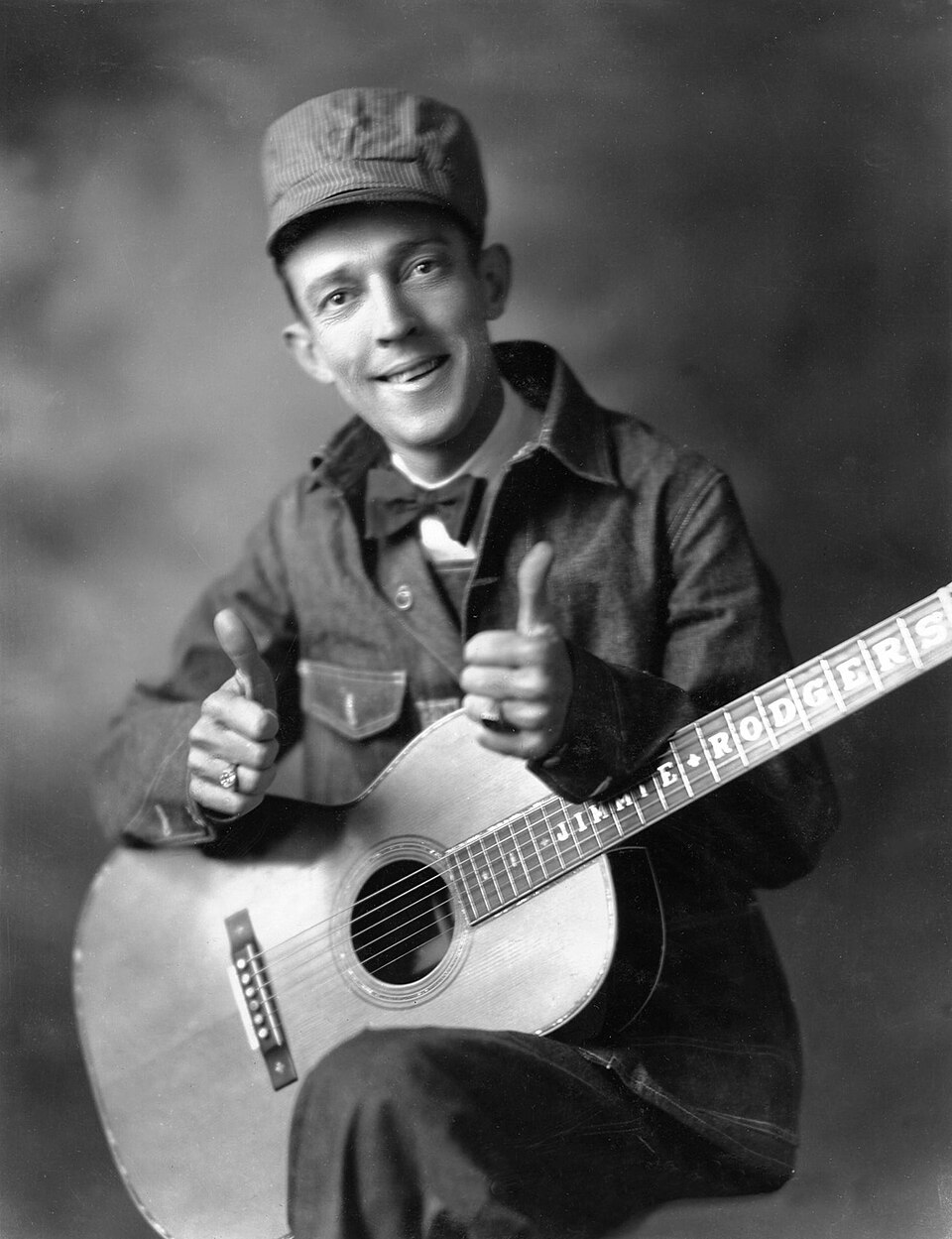
- 1927 — Ralph Peer's Bristol, Tennessee sessions for Victor record the Carter Family and Jimmie Rodgers within days of each other (Malone & Laird 2018)
The First Stars
The Carter Family and Jimmie Rodgers establish country's first national careers through recording and radio during the Depression years.
The Sound
- Carter Family — close vocal harmonies; Maybelle's "thumb-scratch" guitar (melody on bass strings, rhythm above), a foundational country guitar style
- Jimmie Rodgers — blues form and blue notes fused with yodeling ("blue yodels") and plainspoken storytelling
- Repertoire spans sentimental old-time songs, gospel, cowboy ballads, risqué pop tunes, and downhome blues
- Themes: rural idealism, religion, work, hard times — the working-class voice of the Depression
Key Moments
- 1927 — The Carter Family begin recording traditional music for Victor
- 1927–33 — Rodgers records for Victor for six years, becoming country's first national star before dying of tuberculosis in 1933
- 1930s — Depression migration carries southern music west; radio "barn dances" (WSM's Grand Ole Opry, from 1925) spread it nationally (Malone & Laird 2018)
- 1938–42 — Carters broadcast daily on Texas border radio, reaching much of North America
Key Figures
- Ralph Peer — Victor talent scout whose field sessions built the early country catalog
Course Listening Quiz 3
- "Blue Yodel No. 2" — Jimmie Rodgers · blues form + yodel
- "Waiting for a Train" — Jimmie Rodgers 1929 · storytelling, working-class themes
- "Dreaming with Tears in My Eyes" — Jimmie Rodgers & Waldo L. O'Neal
- "Gospel Ship" — The Carter Family · close harmony, thumb-scratch guitar
- "Keep on the Sunny Side" — The Carter Family 1928
- "Mule Skinner Blues" (Blue Yodel No. 8) — Jimmie Rodgers · compared with Bill Monroe's 1940 version below
Full track list in Listening Guide 3.
Western Swing & Singing Cowboys
String bands in Texas and Oklahoma incorporate blues, boogie-woogie, swing, and mariachi elements; Hollywood's singing cowboys attach western imagery to the genre.
The Sound
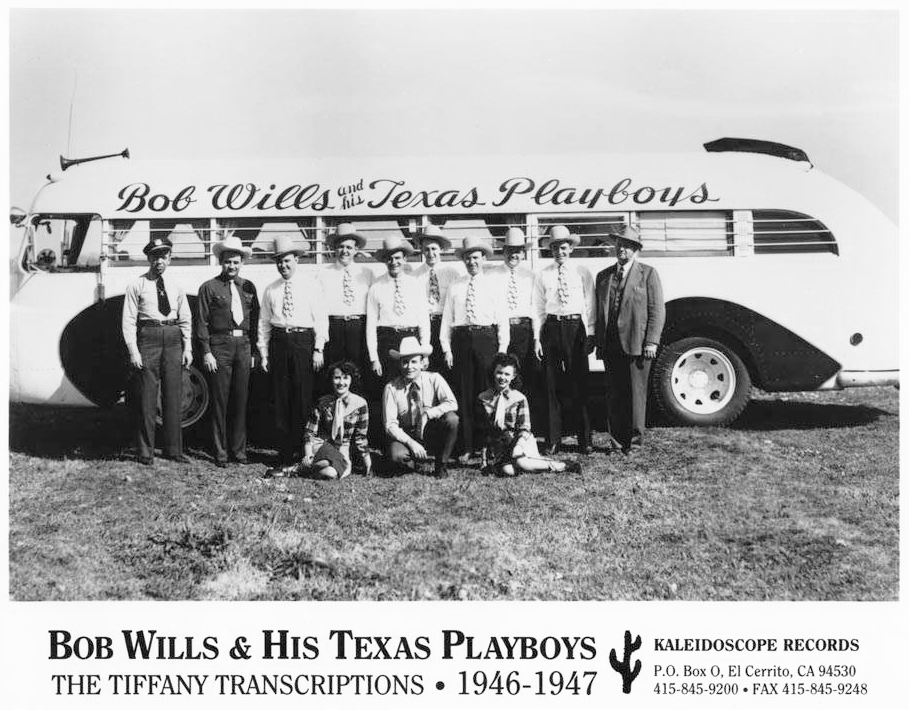
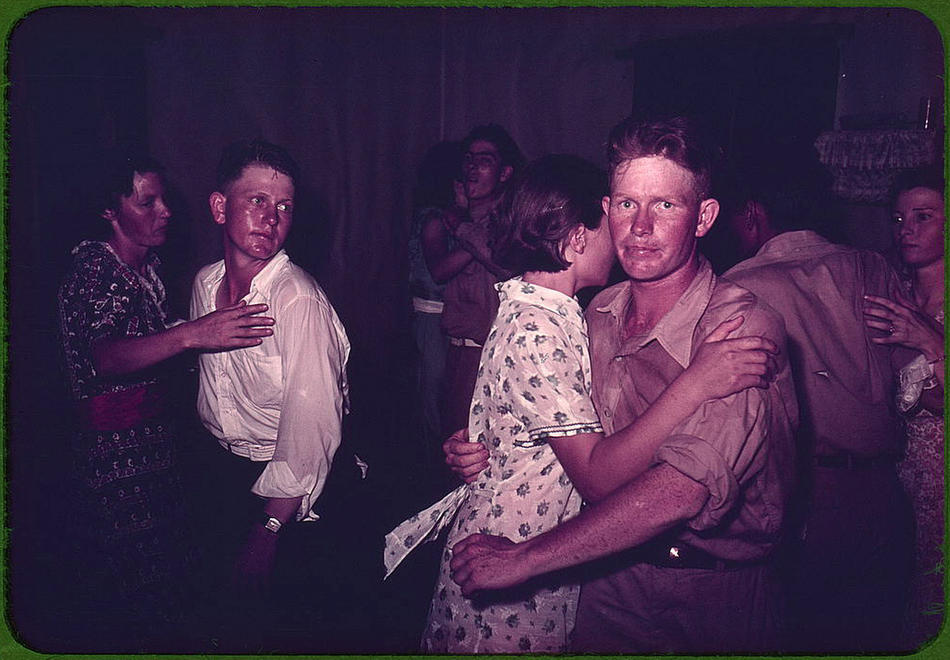
- Country fiddle + blues + boogie-woogie + big-band swing, built for dancing
- Amplified steel guitar and a drum set enter country instrumentation
- Wills's band: fiddle, banjo, three guitars (incl. electric steel), piano, string bass, drums, two trumpets, six saxophones
- Call-and-response between sections, borrowed from swing arranging
- Mexican mariachi brass style — the trumpet duet in "New San Antonio Rose"
Key Moments
- 1934 — Bob Wills forms the Texas Playboys in Tulsa (Malone & Laird 2018)
- 1930s — Gene Autry and Roy Rogers establish the "singing cowboy" in Hollywood film, linking cowboy imagery to country's public identity (Peterson 1997)
- 1940 — "New San Antonio Rose" (32-bar AABA form) tops both popular and "hillbilly" charts
- WWII — rural southerners fan out to war plants and bases, carrying the music nationwide
Key Figures
- Roy Acuff — Grand Ole Opry's biggest star of the era ("Great Speckled Bird")
- Sons of the Pioneers — polished cowboy-song vocal harmony ("Cool Water")
Course Listening Quiz 3
- "Great Speckled Bird" — Roy Acuff
- "Cool Water" — Sons of the Pioneers
- "Sittin' on Top of the World" — Bob Wills
- "New San Antonio Rose" — Bob Wills 1940
- "Brazil" — Ary Barroso (comp.) · Latin currents in 1940s pop
Full track list in Listening Guide 3.
Honky-Tonk & the Birth of Bluegrass
Two postwar developments: amplified honky-tonk, exemplified by Hank Williams, and Bill Monroe's acoustic, virtuosic reworking of the string band.
The Sound: Honky-Tonk
- Electric guitar and steel guitar loud enough for the barroom; songs of drinking, heartbreak, and dislocation (Malone & Laird 2018)
- Hank Williams — spare, direct songwriting; a cracked, emotional vocal delivery
- Found in taverns, "beer joints," honky-tonks, dance halls — the industry consolidating in Nashville
The Sound: Bluegrass
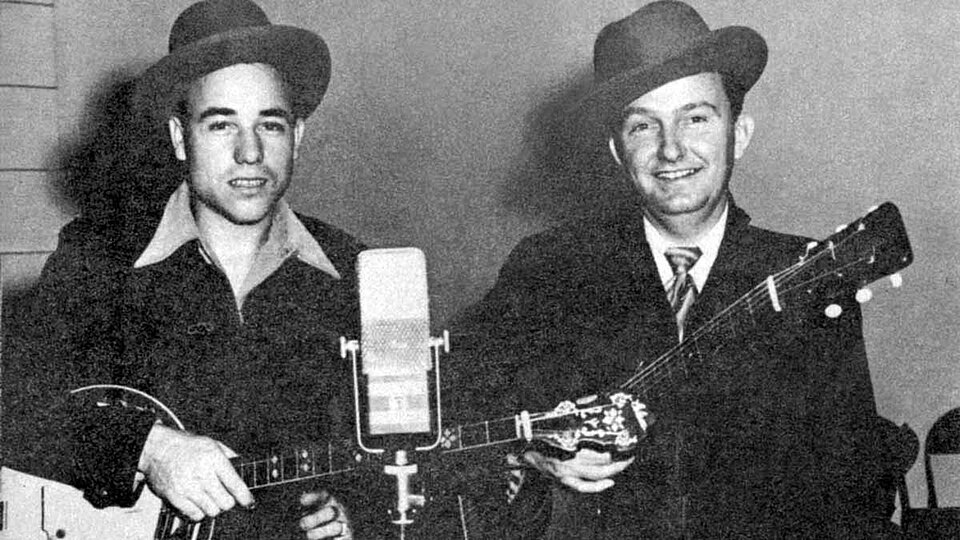
- 4–7 musicians, all acoustic: fiddle, mandolin, banjo, guitar, string bass
- Fast tempos; "high lonesome" tenor lead with close harmonies
- Mandolin "chop" chords on beats 2 & 4; bass steady on 1 & 3; Scruggs-style three-finger banjo interlocking through the texture
- Instrumental virtuosity and improvised "breakaways," paralleling jazz solo practice
Key Moments
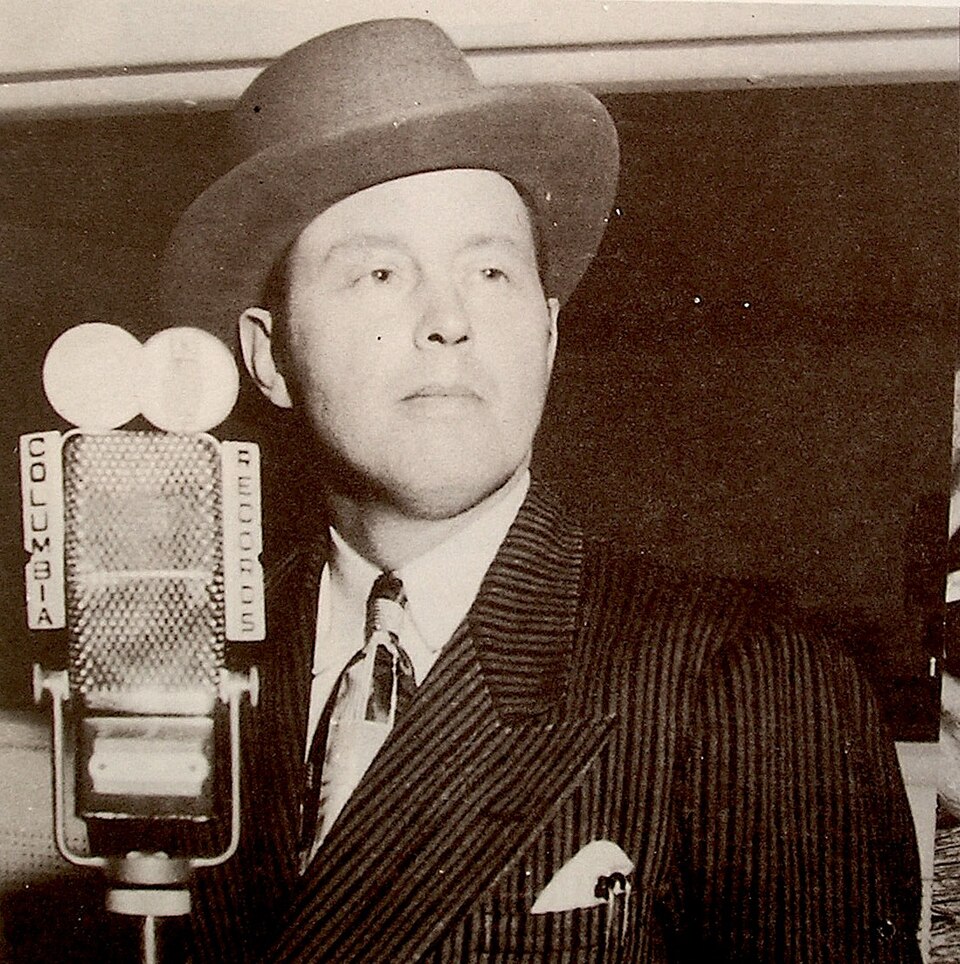
- 1938 — Bill Monroe forms the Blue Grass Boys; his 1940 recording of "Mule Skinner Blues" recasts Rodgers's blue yodel at faster tempo with tighter ensemble playing
- 1945–48 — the "classic" Blue Grass Boys with Lester Flatt and Earl Scruggs define the bluegrass sound (Rosenberg 2005)
- 1948 — Flatt & Scruggs leave to form the Foggy Mountain Boys (together to 1969)
- 1949–53 — Hank Williams's brief run of hits ends with his death at 29 on New Year's Day 1953
Key Figures
- Hank Williams — honky-tonk's defining singer-songwriter
- Arnold Schultz — African American fiddler-guitarist who mentored young Bill Monroe in Kentucky
Course Listening Quiz 3
- "It's Mighty Dark to Travel" — Bill Monroe 1947 · high lonesome sound, breakaways
- "I'm So Lonesome I Could Cry" — Hank Williams · honky-tonk heartbreak
- "Hey, Good Lookin'" — Hank Williams & the Drifting Cowboys
- "The Tennessee Waltz" — Patti Page · country song as pop crossover
- "Foggy Mountain Breakdown" — Flatt & Scruggs · three-finger banjo technique
- "Mule Skinner Blues" — Bill Monroe 1940 · compared with Rodgers's original
Full track list in Listening Guide 3.
Nashville Sound vs. Bakersfield
After rock 'n' roll erodes country's youth audience, Nashville producers pursue pop crossover while the Bakersfield scene maintains a harder honky-tonk sound; bluegrass develops its own institutions.
The Sound
- Nashville Sound — producers Chet Atkins and Owen Bradley replace fiddle and steel with string sections, background choruses, and smooth crooning to win pop listeners (Neal 2019)
- Bakersfield Sound — Buck Owens and Merle Haggard push back with sharp Telecaster twang, drums, and honky-tonk directness (Malone & Laird 2018)
- Bluegrass keeps the acoustic string-band ideal alive outside the mainstream
Key Moments
- 1957–63 — Patsy Cline's crossover hits ("Crazy," "I Fall to Pieces") define the Nashville Sound
- 1959 — Rebel Records founded; with Starday, a dedicated bluegrass label infrastructure emerges
- 1965 — first multi-day bluegrass festival, Fincastle/Roanoke, Virginia (Rosenberg 2005)
- 1966 — Bluegrass Unlimited, the first dedicated fan magazine; 1968 — Earl Scruggs's banjo manual codifies technique and repertoire → bluegrass becomes a self-aware genre with its own canon
- 1967 — "Foggy Mountain Breakdown" in Bonnie and Clyde puts bluegrass in theaters nationwide (two Grammys)
Key Figures
- Patsy Cline — leading Nashville Sound vocalist (1932–1963)
- Chet Atkins & Owen Bradley — producers who defined the Nashville Sound
- Buck Owens & Merle Haggard — principal figures of the Bakersfield Sound
- Johnny Cash — spare "boom-chicka" style crossing country, rockabilly, and folk
- Flatt & Scruggs — brought bluegrass to film, television, and the folk revival
Outlaw, Countrypolitan & Newgrass
Artists claim creative control outside the Nashville production system; progressive bluegrass incorporates rock and jazz; a 1980s neotraditionalist movement returns to honky-tonk style.
The Sound
- Outlaw country — rock-band grit, self-produced records, live looseness against countrypolitan's orchestral gloss (Malone & Laird 2018)
- Countrypolitan — the Nashville Sound's lusher 1970s successor (Glen Campbell, Kenny Rogers, Dolly's crossover hits)
- Newgrass / progressive bluegrass — bluegrass instrumentation with rock repertoire, long jams, and jazz harmony (Rosenberg 2005)
- Neotraditionalism (1980s) — George Strait and Randy Travis revive fiddle-and-steel honky-tonk style
Key Moments
- 1971 — New Grass Revival forms, giving progressive bluegrass its name
- 1972 — the Nitty Gritty Dirt Band's Will the Circle Be Unbroken unites rock and old-time generations
- 1976 — Wanted! The Outlaws (Waylon, Willie, Jessi Colter, Tompall Glaser) becomes country's first platinum album
- 1970s–80s — Dolly Parton moves from Porter Wagoner duets to writing "Jolene" and "I Will Always Love You" (both 1974) to pop stardom
Key Figures
- Willie Nelson & Waylon Jennings — central figures of the outlaw movement, associated with the Austin scene
- Dolly Parton — songwriter and crossover star (recorded "Mule Skinner Blues" in 1971)
- Loretta Lynn — songwriter chronicling working-class women's lives
- Sam Bush & New Grass Revival — newgrass pioneers
- George Strait & Randy Travis — 1980s neotraditionalists
Arena Country & Bluegrass Revivals
Country becomes one of the best-selling formats in American popular music; a roots revival brings bluegrass renewed commercial success.
The Sound
- Arena-rock staging and production values behind country songcraft; line-dance and crossover radio hits
- Shania Twain and producer Mutt Lange fuse country with pop-rock hooks
- Alison Krauss & Union Station bring a polished, vocal-forward bluegrass to mass audiences
Key Moments
- 1989 — Garth Brooks debuts; 1991 — SoundScan's accurate sales counting reveals country's true market size, and Ropin' the Wind is the first country album to enter the pop chart at No. 1 (Neal 2019)
- 1997 — Shania Twain's Come On Over becomes the best-selling album by a woman in any genre
- 2000 — the O Brother, Where Art Thou? soundtrack sells eight million copies and wins the Album of the Year Grammy (2002), igniting a roots revival (Neal 2019)
- 1990s–2000s — Alison Krauss becomes one of the most Grammy-awarded artists in history
Key Figures
- Garth Brooks — among the best-selling solo artists in U.S. history
- Shania Twain — international country-pop crossover
- Alan Jackson — neotraditionalist; "Gone Country" comments on the decade's boom
- Alison Krauss — fiddler and vocalist central to the bluegrass revival
- The Chicks — banjo-and-fiddle-forward superstars; blacklisted by country radio in 2003 over Iraq War comments
Course Listening Quiz 3
- "Gone Country" — Alan Jackson · commentary on the 1990s boom
- Selections from O Brother, Where Art Thou? — various artists · the roots revival
Full track list in Listening Guide 3.
Country Now
Country-pop dominates radio; Americana emerges as a parallel institutional category; debates over the genre's boundaries return to prominence.
The Sound
- Country-pop — Taylor Swift's early songwriting bridges Nashville and mainstream pop before her departure from the genre
- Bro-country (2010s) — hip-hop and arena-rock production; lyrics centered on trucks, partying, and small-town leisure
- Americana — institutionalized as its own format and Grammy category (2009) for roots music outside country radio
- Bluegrass resurgence — Billy Strings's jamgrass arenas; Molly Tuttle's flatpicking; Chris Stapleton's soul-country
Key Moments
- 2004–06 — Gretchen Wilson's "Redneck Woman" and Taylor Swift's debut mark two directions for 2000s country
- 2016 — Beyoncé performs "Daddy Lessons" with The Chicks at the CMA Awards; the backlash previews the genre-gatekeeping debate
- 2019 — Billboard removes Lil Nas X's "Old Town Road" from the country chart, prompting public debate over how genre boundaries are defined and enforced
- 2024 — Cowboy Carter: Beyoncé reclaims country's Black roots, features Linda Martell, and becomes the first Black woman to top the country albums chart; it wins the Album of the Year Grammy (2025)
Key Figures
- Taylor Swift — began in country before moving fully into pop
- Chris Stapleton — bluegrass-trained (the SteelDrivers) soul-country songwriter
- Billy Strings & Molly Tuttle — bluegrass virtuosity for new audiences
- Rhiannon Giddens — Carolina Chocolate Drops co-founder; banjo historian reclaiming Black string-band traditions (she plays on "Texas Hold 'Em")
- Beyoncé — Cowboy Carter (2024)
Course Listening Quiz 3
- "Tim McGraw" — Taylor Swift 2006 · country-pop songwriting
- "Redneck Woman" — Gretchen Wilson 2004 · working-class identity, 2000s style
- Selections from Cowboy Carter — Beyoncé 2024 · "Texas Hold 'Em," "Blackbiird," "16 Carriages" · Week 8 review discussion
Full track list in Listening Guide 3.